Is Wrist and Forearm Massage Worth the Cost? A Practical Breakdown


Last Updated: October 25, 2026
Quick Summary
Is wrist massage worth the cost? That depends on what you choose and whether you'll actually use it consistently. The cheapest option you abandon costs more per use than a pricier option you stick with, so match your choice to your real budget, schedule, and commitment level.
- Self-massage requires no upfront cost but demands daily discipline to see results within 2-3 weeks
- Home massagers offer convenience and consistent pressure for users who want structure without scheduling appointments
- Professional sessions cost more but provide expert feedback and real-time pressure adjustment
- Cost per use matters more than sticker price, calculate realistic monthly frequency before comparing options
- Commit to any approach for at least 14-21 days before deciding if it works for you
Table of Contents
- What Makes Wrist and Forearm Massage Worth Considering
- Professional Wrist Massage vs Self-Massage: What's the Real Difference
- How to Massage Your Wrist: Techniques You Can Use at Home
- Wrist/Forearm Massager for Home Use: Setup, Consistency, and Long-Term Value
- Wrist/Forearm Massage Duration: How Long and How Often for Results
- The Real Cost-Benefit Equation: When Wrist Massage Makes Sense
- Starting Your Wrist Massage Routine Today
- Frequently Asked Questions
What Makes Wrist and Forearm Massage Worth Considering
Is wrist massage worth the cost? It depends on what you're comparing it to and what you expect. This guide breaks down the trade-offs between professional sessions, self-massage, and at-home devices so you can decide.
Wrist/forearm massage addresses muscle tension and stiffness in your forearms, hands, and wrists.
The key insight most guides miss: the cheapest option often fails because it requires discipline you won't maintain. A tool you use three times and abandon costs more per session than professional care you actually stick with.
Professional Wrist Massage vs Self-Massage: What's the Real Difference
Professional massage and self-massage target the same forearm, hand, and wrist muscles, but differ in pressure control, feedback, and logistics.
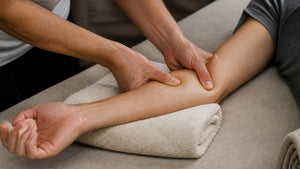
What a professional session actually involves
A typical wrist-focused appointment is not just a wrist rub. Most practitioners work the forearm first, because the muscles that move your fingers and wrist originate near the elbow. A session usually follows a pattern:
- A short intake conversation about where you feel tension and what movements bring it on
- Warm-up strokes along the forearm to prepare the tissue
- Focused pressure on the flexor and extensor muscle groups
- Joint mobilization of the wrist and hand
- Cool-down strokes and a brief check-in on how the area feels
A therapist adjusts pressure in real time based on your feedback, which is hard to replicate alone, and can spot tension patterns you may not notice.
What self-massage actually involves
Self-massage puts control in your hands: you decide pressure, duration, and frequency, and can do it daily without an appointment. The trade-off is that most people under-apply pressure, rush, or skip sessions once motivation fades.
Practitioners describe a common pattern: people who self-massage consistently for two to three weeks often report their forearm feels less tight during daily tasks, while those who massage once a week or less report little change. Consistency matters more than technique.
A practical side-by-side
Factor |
Professional massage |
Self-massage |
|---|---|---|
Pressure control |
Therapist adjusts in real time |
You control, but may under- or over-apply |
Technique learning curve |
None, therapist handles it |
Requires learning basic strokes |
Scheduling |
Appointment, travel time |
Anytime, anywhere |
Frequency |
Limited by cost and availability |
As often as you choose |
Feedback |
Expert eyes on tension patterns |
Self-assessment only |
Ongoing cost |
Per session |
Time only |
When each approach fits
If your wrist tension is mild and you can commit to a short daily routine, self-massage is a low-cost starting point.
Mayo Clinic guidance on massage therapy notes that massage is generally considered safe for most people when performed properly, and that pressure should always be adjusted to comfort.
The honest answer: professional care is worth the cost if the structure and expertise change your behavior. If you'd self-massage daily anyway, you may not need sessions.
How to Massage Your Wrist: Techniques You Can Use at Home
Self-massage requires a few basic techniques combining gentle pressure with slow, deliberate movements. Learn step-by-step techniques with video guidance.
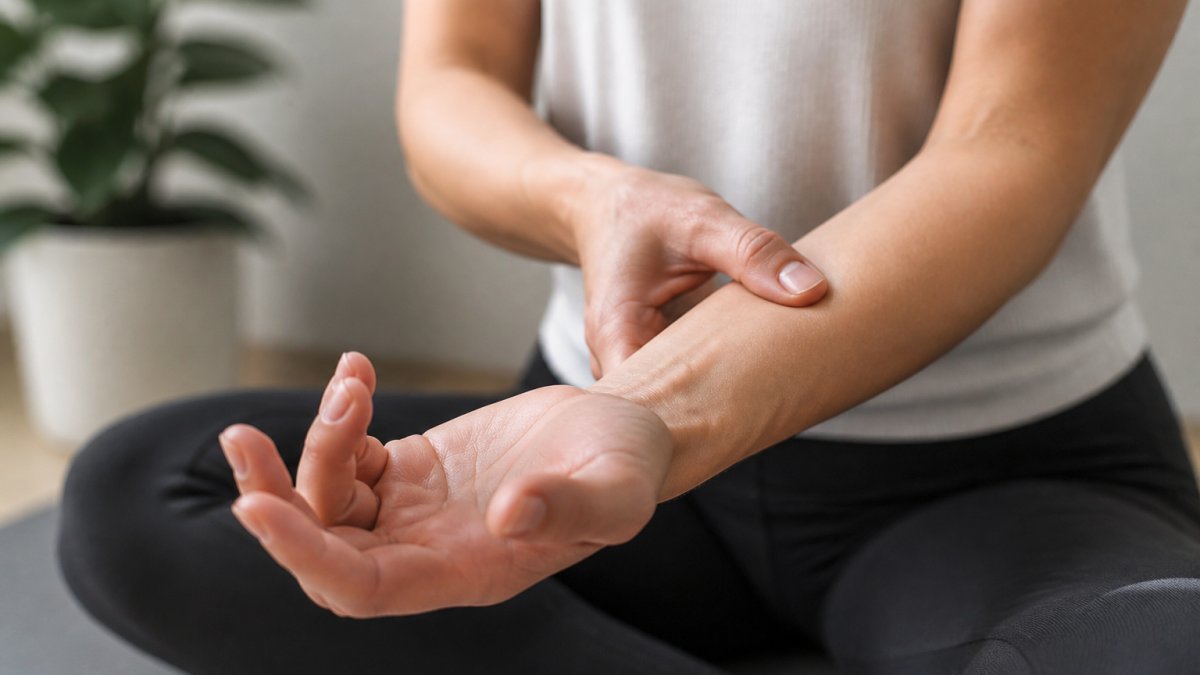
Circular motions on the forearm:
- Place your thumb on the inside of your forearm, about two inches below your wrist
- Apply moderate pressure and move your thumb in slow circles
- Work from your wrist up toward your elbow
- Spend 30-60 seconds on each area
- Repeat on the outside of your forearm
Wrist flexor massage:
- Extend one arm with your palm facing up
- Use your opposite thumb to apply pressure along the inside of your forearm
- Move from your wrist toward your elbow in short strokes
- This targets muscles responsible for gripping and repetitive motion
- Do this for 1-2 minutes per arm
Hand and palm release:
- Make a fist with one hand
- Use your opposite thumb to press into your palm
- Apply slow, circular motions across your entire palm
- Pay extra attention to the base of your thumb
- Spend 1-2 minutes on each hand
Move slowly and apply steady pressure rather than fast, aggressive motions, most people rush and reduce effectiveness.
Consistency matters more than intensity: a light daily massage delivers better results than aggressive massage twice a month. If self-massage feels difficult or uncomfortable, a different approach may suit you better.
National Institutes of Health research on manual therapy indicates that regular, gentle massage supports muscle relaxation and flexibility when practiced consistently over time.
Wrist/Forearm Massager for Home Use: Setup, Consistency, and Long-Term Value
At-home wrist massagers offer a middle ground between self-massage and professional care, providing consistent pressure and technique without requiring you to learn form or maintain discipline.
A quality wrist and forearm massager delivers targeted relief in a portable format.
The real advantage is convenience: use it while working, traveling, or relaxing at home, with no appointment or travel time, and you control when and how often.
Setup is straightforward: most massagers need minimal assembly and work out of the box.
Long-term value depends on consistent use.
For musicians, athletes, and office workers, a home massager becomes part of a daily routine faster than self-massage because it requires less discipline.
Wrist/Forearm Massage Duration: How Long and How Often for Results
Effective wrist massage doesn't require hours. Most people see better results from shorter, consistent sessions than occasional longer treatments.
Recommended frequency and duration:
Approach |
Session Length |
Frequency |
Weekly Time |
|---|---|---|---|
Self-massage |
5-10 minutes |
Daily |
35-70 minutes |
Home massager |
10-15 minutes |
3-5 times weekly |
30-75 minutes |
Professional massage |
30-60 minutes |
1-2 times monthly |
30-120 minutes |
Most people notice improvement within 2-3 weeks of consistent massage, so commit to daily or near-daily sessions for at least 14-21 days before evaluating whether an approach works.
The common mistake is expecting results from sporadic use. One session per month won't produce lasting change, muscles return to their previous state between sessions. Consistency drives results.
With a home massager or self-massage, aim for at least three sessions per week for meaningful improvement. Daily use accelerates results but isn't necessary, find a frequency you can maintain long-term rather than an ambitious routine you'll abandon.
Professional sessions typically last 30-60 minutes. Monthly sessions provide some benefit, but weekly or biweekly sessions deliver faster, more noticeable results, at the cost of scheduling complexity.
The Real Cost-Benefit Equation: When Wrist Massage Makes Sense
Most guides answer "is wrist massage worth the cost" by listing benefits, which misses the question.
Step 1: Define what "worth it" means to you
Before comparing options, decide what outcome you're paying for. Common goals include:
- Less tightness in the forearm during typing or gripping
- A relaxing routine at the end of the workday
- Better perceived flexibility before a workout or performance
- A way to break up long hours at a desk
Write down your top goal. If it's relaxation, a cheap option you enjoy may be worth more than an expensive one you dread. If it's consistency during a busy week, convenience may outweigh per-session cost.
Step 2: Estimate cost per use, not sticker price
The number that matters is cost per use, not the upfront price.
A simple way to estimate:
- Count how many times you realistically expect to use each option in a month
- Divide the total monthly outlay by that number
- Compare the results across options
If you are unsure about your realistic frequency, assume the lower number. Most people overestimate how often they will stick with a new routine.
Step 3: Weigh the three options honestly
Option |
Upfront cost |
Ongoing cost |
Convenience |
Best fit |
|---|---|---|---|---|
Self-massage |
None |
Time only |
High, anytime |
Disciplined users with mild tension |
Home massager |
One-time purchase |
None per use |
High, no appointment |
Busy users who want structure without scheduling |
Professional sessions |
None |
Per session |
Lower, appointment and travel |
Users who want expert feedback and hands-on adjustment |
Step 4: Set a realistic trial window
Give any approach at least two to three weeks of consistent use before judging it. A common mistake is trying something twice, feeling no different, and concluding it does not work. Muscle tension patterns build up over weeks, and they unwind on a similar timeline. If you cannot commit to a trial window, that itself is useful information, it may point you toward the option that requires the least discipline.
Step 5: Know when to stop or change course
Worth is not permanent. If an option stops fitting your budget, schedule, or preferences, switch.
A note on expectations
Massage is a comfort and relaxation practice, not a replacement for medical assessment.
Starting Your Wrist Massage Routine Today
Beginning a wrist massage routine doesn't require expensive equipment or professional guidance. Start with self-massage or a home massager and commit to a realistic schedule.
If you choose self-massage, spend five minutes learning proper technique. Use the circular motions and flexor massage methods described earlier. Start with three sessions per week and increase frequency if you enjoy it.
If you choose a home massager, explore how to use a massager to understand proper technique and get the most from each session.
The first two weeks are critical. That's when most people abandon routines. Commit to your chosen approach for at least 14 days before deciding whether it works for you.
American Massage Therapy Association resources on self-care emphasizes that regular massage practice, whether professional or self-administered, supports muscle health and flexibility when maintained consistently.
As you build the habit, track how your wrist feels. Notice improvements in flexibility, reduction in stiffness, or changes in how your hand functions during daily activities.
The decision about whether wrist massage is worth the cost becomes clear after you've tried it consistently. The key is starting small, staying consistent, and reading testimonials from others who've found success with similar approaches.
Your wrist health improves through regular care, not occasional treatment.
Frequently Asked Questions
Is a wrist massager worth buying for home use?
A wrist massager can offer strong value if you experience regular forearm or wrist discomfort and prefer consistent, on-demand relief over occasional professional sessions. Home-use tools provide flexibility—you can use them during work breaks, after exercise, or whenever tension builds. The real worth depends on your commitment to regular use and whether the discomfort significantly affects your daily activities or work performance. Many users find the investment worthwhile when they stick with a routine over several weeks.
How does a wrist massager compare with a professional massage?
Professional massage offers personalized technique, deeper assessment of your specific tension patterns, and the expertise to adapt pressure in real time. A wrist massager for home use provides convenience, lower per-session cost over time, and the ability to target relief exactly when you need it without scheduling. Neither replaces the other entirely—some people use both: professional massage occasionally for comprehensive care, and a home tool for daily maintenance and quick relief between appointments.
How long should you use a wrist massager?
Most users find effective results with 5 to 10 minutes per session, applied to the forearm, wrist, and hand. Sessions can be done daily or several times per week depending on your discomfort level and work demands. Consistency matters more than duration—regular shorter sessions often produce better results than occasional longer ones. Start with shorter sessions and gradually increase based on how your muscles respond. If you experience increased discomfort, reduce frequency and check your technique or consult a professional.
What should you consider before paying for a wrist massage?
Consider your budget, frequency of discomfort, lifestyle fit, and whether you prefer professional care or self-directed tools. Ask yourself: How often do I experience tension? Will I use a tool or service consistently? Do I prefer hands-on professional attention or independent management? What fits my schedule and budget long-term? If discomfort is severe or persistent, professional guidance first can help you understand what's driving it before investing in self-care tools.

- Paul Kleiman