7 Deep Tissue Massage Safety Rules for Sore Tendons


Last Updated: October 28, 2026
Quick Summary
Deep tissue massage is not safe directly on an irritated tendon, especially when the area is hot, swollen, or sharply painful. Work the muscle belly instead of the tendon itself, start lighter than you think you need, and keep sessions to a few minutes at a time.
- Skip deep pressure when the area is hot, swollen, or sharply painful.
- Direct deep pressure on an irritated tendon is the most common way people flare it.
- Check in every 30 seconds and keep sessions short, a few minutes at a time.
- If the area is more tender the next day, you went too hard or too deep.
- Massage eases tightness but does not replace progressive loading, strengthening, or rest.
Table of Contents
- Is Deep Tissue Massage Safe for Tendonitis? The Short Answer
- Is It Okay to Massage Sore Tendons? What the Evidence Says
- When to Avoid Deep Tissue Massage Around a Sore Tendon
- Tendonitis vs Tendinosis: Why the Difference Changes Your Pressure
- Gentle Forearm Massage Techniques You Can Do Safely
- Forearm Self-Massage Tools: What to Look For
- Where Massage Fits Alongside Loading and Recovery
- Choosing a Self-Massage Tool for Forearm and Wrist Tension
- Frequently Asked Questions
Is Deep Tissue Massage Safe for Tendonitis? The Short Answer
This guide walks through general considerations for self-massage around a sore tendon. For more on the topic, explore our arm massage tool for tendonitis articles.
Is It Okay to Massage Sore Tendons? What the Evidence Says
-
Massage can ease perceived tightness in the muscles around a tendon
-
It may improve short-term comfort and range of motion
-
It does not replace progressive loading, strengthening, or rest
-
That massage repairs a damaged tendon on its own
-
That deep pressure "breaks down" scar tissue or adhesions in a predictable way
-
That massage speeds tissue healing or prevents long-term tendon problems
A useful way to think about it: separate established tendon rehabilitation principles from marketing claims. The NHS guidance on tendon problems is clear that most tendon issues improve with gradual, progressive exercise over weeks and months. Reviews such as the BJSM review of tendon loading programs consistently point to graded loading as the backbone of tendon care. Massage sits alongside that as a comfort tool, not as a substitute.
When to Avoid Deep Tissue Massage Around a Sore Tendon
- Sharp pain when you press the tendon itself
- Visible swelling, warmth, or redness over the area
- Pain that lingers or worsens hours after massage
- Numbness, tingling, or weakness in the hand or fingers
- Sudden loss of function or a snap you felt at the time of injury
- Pain that is severe, persistent, or getting worse despite rest
- Stage: Is the area hot, swollen, or sharply painful? If yes, skip deep pressure and use light work around the area only, or wait.
- Location: Work the muscle belly, not the tendon itself. Direct deep pressure on an irritated tendon is the most common way people flare it.
- Pressure: Start lighter than you think you need. Mild warmth is fine; sharp pain is not.
- Duration: Keep sessions short, a few minutes at a time, and check in every 30 seconds.
- Next-day response: If the area is more tender or grumpier the next day, you went too hard or too deep. Back off.
Tendonitis vs Tendinosis: Why the Difference Changes Your Pressure
| Stage | What It Feels Like | Pressure Approach | Main Focus |
|---|---|---|---|
| Tendonitis (early) | Hot, swollen, sharp | Very light, avoid direct pressure | Calm it down, rest |
| Tendinosis (long-term) | Achy, stiff, grumpy | Gentle to moderate around the tendon | Progressive loading |
| Tendinopathy (umbrella term) | Varies | Match to current symptoms | Rehab plan |
Gentle Forearm Massage Techniques You Can Do Safely
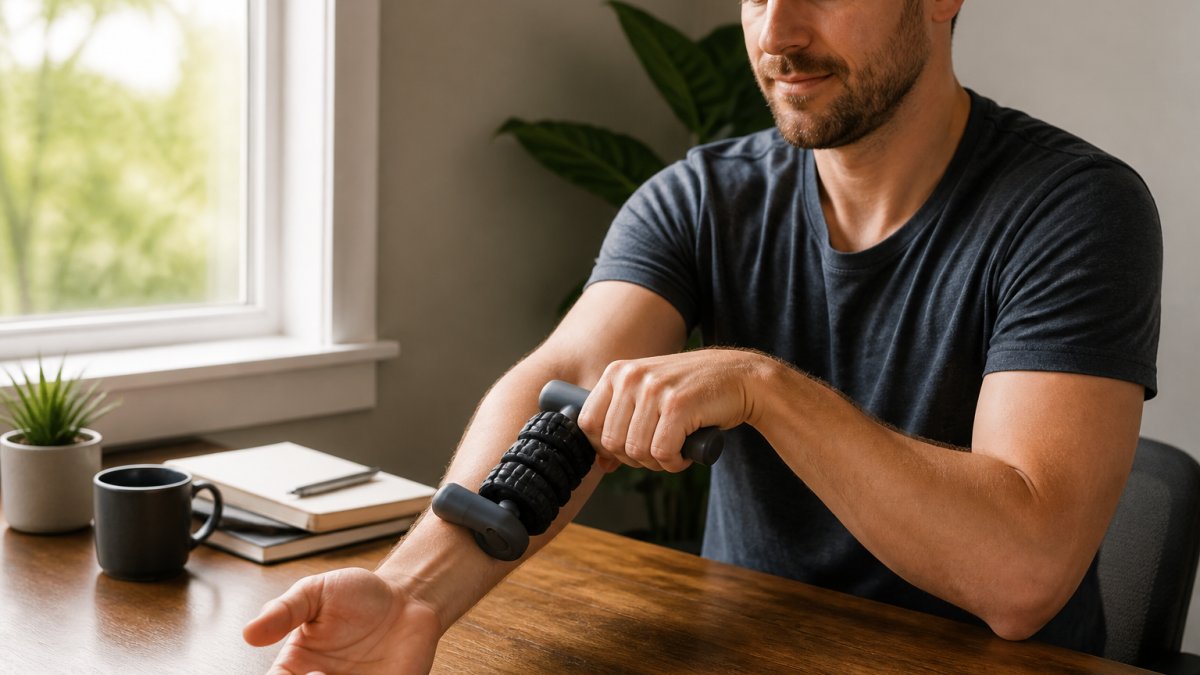
- Warm up with a warm shower or a minute of easy hand movements. For step-by-step guidance, see deep tissue forearm massage techniques.
- Work the muscle belly of the forearm, not the tendon near the wrist.
- Use slow strokes along the length of the muscle, light at first.
- Check in every 30 seconds. Mild warmth is fine; sharp pain is not.
- Stop if the area feels more tender afterward.
Forearm Self-Massage Tools: What to Look For
Look for: Our arm massage tool for forearm discomfort guide walks through what to prioritize.
- Adjustable pressure you can dial up or down
- A shape that wraps the forearm, not a flat roller that slips off
- Portable size that fits in a bag or carry-on
- Smooth, even contact so pressure is spread out, not spiked
Where Massage Fits Alongside Loading and Recovery
- Loading and strengthening are the foundation
- Rest and sleep let the tissue recover
- Massage eases tightness so you can move comfortably
- Stretching helps maintain range of motion
Research on tendon rehab, such as the BJSM review of tendon loading programs, keeps pointing to graded exercise as the backbone of recovery. Massage sits alongside that, helping you feel looser between sessions.
Choosing a Self-Massage Tool for Forearm and Wrist Tension
The Roleo Therapeutic Arm Massager is a portable self-massage tool inspired by the wringer from old-fashioned clothes washers. It is designed for use at home, at work, or anywhere. Roleo has been trusted since 2006.
Best for: office workers, musicians, athletes, and tradespeople.
You can see the Roleo arm and hand massager.
Frequently Asked Questions
Can deep tissue massage make tendon pain worse?
It can if the pressure is too aggressive or applied directly over an acutely irritated tendon. Deep tissue massage works by pressing into muscle and connective tissue, and a tendon that is already inflamed may respond to hard pressure with more discomfort. Start gently, work the muscle around the tendon rather than the tendon itself, and stop if soreness increases rather than settles within a day.
Should you massage directly over a sore tendon?
Generally, no. Massaging the muscles that surround and support the tendon is usually more comfortable and more useful than pressing straight onto the tender spot. If you want to work near the tendon, use light pressure and short strokes, and keep the focus on the forearm muscle belly. Direct pressure on a sore tendon is one of the most common reasons people feel worse afterward.
When should you ask a healthcare professional before massage?
Ask first if you have sharp or worsening pain, visible swelling, warmth or redness over the area, numbness or tingling, or pain that started after a sudden injury. The same applies if you take blood thinners, have a bleeding disorder, or have been told you have a tendon tear. A professional can confirm what is causing the pain before you add pressure to it.
Can a massage tool be used on the forearm without pressing on a sore spot?
Yes, and that is often the better approach. A forearm self-massage tool lets you work the muscle belly while steering around the tender point. Keep the pressure gradual, move slowly along the muscle rather than jabbing at one spot, and check how the area feels the next day. If discomfort rises instead of easing, reduce the pressure or skip that area.
Sore tendons ask for patience, not force. If you want a controlled way to ease forearm and wrist tension between strengthening sessions, Roleo Massager gives you adjustable, even pressure in a portable tool trusted since 2006. Get started with Roleo Massager and work the muscle, not the sore spot.

- Paul Kleiman