How to Use Ice for Chronic Elbow Tendonitis Safely


Table of Contents
- What Ice Can and Cannot Do for Chronic Elbow Tendonitis
- Ice or Heat for Tennis Elbow: A Practical Decision Guide
- How to Apply Ice Safely to the Elbow
- Tennis Elbow Treatment at Home: Building a Recovery Routine
- Tennis Elbow Exercises for a Progressive Plan
- How Long Does Tennis Elbow Last and What Affects Recovery
- When to Have Persistent Elbow Pain Assessed and Booking Your Next Step
- Frequently Asked Questions
How to Use Ice for Chronic Elbow Tendonitis Safely
Last Updated: November 10, 2026
Many people with elbow discomfort reach for an ice pack first, and that instinct is worth understanding before you use one, since ice tendonitis is a common concern for people who spend long hours gripping or typing. At Roleo Massager, we put together this guide to explain what ice does and does not do for chronic elbow tendonitis, when heat may be the better choice, and how to apply cold safely. Ice can offer short-term comfort, but it works best as one part of a broader plan that includes gentle movement and attention to what triggers your symptoms.
What Ice Can and Cannot Do for Chronic Elbow Tendonitis
Ice is commonly used as a temporary comfort measure after a long day of gripping or typing, and it is not a substitute for assessment of tendon problems that have lasted for months.
Watch out: Relief from ice can make it tempting to return to heavy gripping right away. Pain that eases during icing does not mean the tendon is ready for the same load.
Ice or Heat for Tennis Elbow: A Practical Decision Guide
Ice and heat feel different on the skin and are used for different reasons. Neither one is presented here as changing the underlying tendon, so the practical question is which one feels more comfortable to you today.
A simple way to decide is to match the choice to the moment:
| Situation | Often a better fit | Why |
|---|---|---|
| Soreness in the hours after gripping, lifting, or racquet sports | Ice | Cold may take the edge off short-term discomfort |
| Stiff, tight forearm first thing in the morning | Heat | Warmth can make the first movements feel less restricted |
| Stiff before a task you cannot avoid | Heat, then gentle movement | Loosening up first can make the task feel easier |
| Visible puffiness or a warm area after activity | Ice | Cold is commonly used around swelling |
| Achy elbow that feels better once you warm up | Heat | Warmth suits tissue that loosens with movement |
Track how your elbow feels the next morning rather than judging by the first minute of application.
Watch out: Never use either ice or heat to push through sharp pain. If a session leaves the elbow more irritated the next day, that is a signal to change the approach, not to add more of the same.
If you are unsure which to start with, begin with the option that matches your current symptom, keep sessions short, and give yourself a day to see how the elbow responds before switching.
How to Apply Ice Safely to the Elbow
Always place a thin cloth barrier between the cold source and your skin. A towel, a pillowcase, or a folded shirt works. Direct contact between ice and bare skin can irritate or damage tissue, especially on the bony outer edge of the elbow where there is little padding.
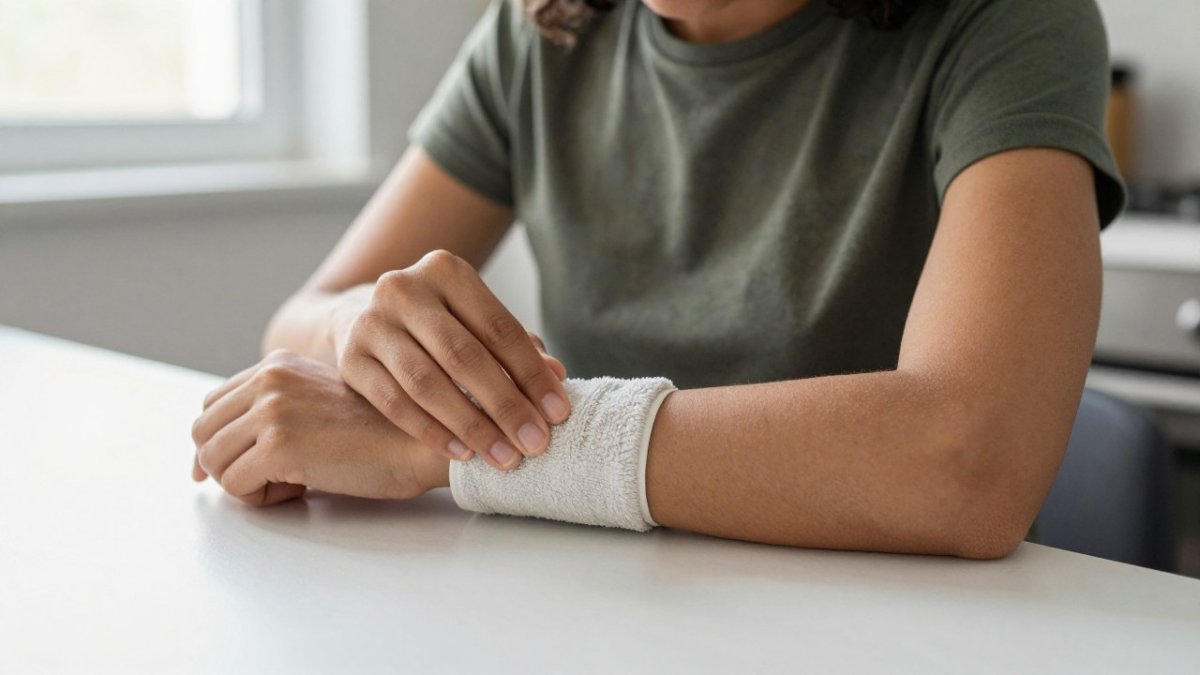
Whichever you use, wrap it so the cold reaches the skin gently rather than sharply.
Step-by-step application
- Set up before you start. Have a timer, a thin cloth, and a comfortable place to sit so you are not holding the pack in place with a tense arm.
- Wrap the cold source. One layer of cloth is usually enough; two layers if the cold feels sharp.
- Place it on the sore area. For outer-elbow discomfort, rest the pack along the outer forearm just below the elbow joint rather than pressing it into the bone.
- Stay relaxed for 15 to 20 minutes. Longer is not better. Cold that stays on too long can leave skin numb and pale and does not add useful benefit.
- Remove and let the skin warm back up. Wait at least an hour before the next session so the skin can return to normal color and sensation.
Duration, frequency and precautions
- Duration: About 15 to 20 minutes per session.
- Frequency: Many people use it 3 to 4 times a day, with breaks between sessions.
- Timing: After activities that aggravate the elbow, such as lifting, typing, or racquet sports, is a common pattern.
- Stop if: skin turns very pale, stays numb for a long time, or becomes painful rather than comfortably cold.
- Avoid: icing over an open wound, on skin that is already numb, or if a condition affects circulation or sensation in the arm.
A common mistake is icing for much longer than needed, thinking more time brings more relief. Shorter, consistent sessions are safer and easier to repeat. Another mistake is icing and then immediately returning to the same heavy gripping or lifting that caused the soreness, which undoes the comfort the cold provided.
Watch out: If you cannot feel the cold properly, or if the skin does not return to normal color within a few minutes of removing the pack, stop using ice and speak with a qualified professional before trying again.
Tennis Elbow Treatment at Home: Building a Recovery Routine
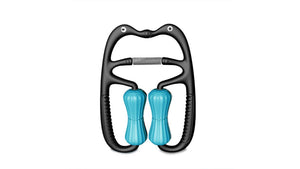
The Roleo Arm & Hand Massager is a non-electric, portable tool that lets you apply firm pressure to the forearm at your own pace. It is designed for general self-massage and wellness use, so pair it with the same gentle, pain-free approach you would use with any tool.

For a fuller look at easing forearm tension at home and at work, see our hand, wrist and arm tension solutions guide.
Tennis Elbow Exercises for a Progressive Plan
Before you add anything new, read our foam roller mistakes guide so you avoid pressing too hard on sore forearm muscles. For a deeper technique walkthrough, see our deep tissue forearm massage guide.
How Long Does Tennis Elbow Last and What Affects Recovery
Several factors shape how quickly things improve:
- How long the symptoms have been present
- How much the aggravating activity can be reduced
- Whether the forearm muscles are also tight or weak
- Consistency with stretching, strengthening and rest
Expect gradual change rather than overnight results. Small, steady improvements are normal.
When to Have Persistent Elbow Pain Assessed and Booking Your Next Step
If elbow discomfort persists, worsens, or is accompanied by other symptoms, consult a qualified healthcare professional.
Whether you are weighing the cost of ongoing self-care against professional help, our wrist and forearm massage cost breakdown can help you compare options. When you are ready to add a simple tool to your routine, the Roleo Arm & Hand Massager is available on our site.
Elbow discomfort can wear on your daily routine, and it is worth addressing early. Roleo Massager's arm and hand massager gives you a simple, non-electric way to work on forearm tension at home, and it is ready for you to try whenever you are. Buy Roleo
Frequently Asked Questions
Is ice or heat better for elbow tendonitis?
If pain is persistent or worsening, the best next step is to have the elbow assessed by a qualified healthcare professional.
How long should you ice an elbow?
A common approach is to apply a cold pack for about 15 to 20 minutes at a time, wrapped in a thin towel so the skin is never placed directly on ice, and to repeat this a few times a day during flare-ups. Stop if the skin becomes numb, pale, or uncomfortable. Icing is best used as a symptom-management step, paired with reduced aggravating activity, and not as a substitute for a full recovery plan.
How long does tennis elbow last?
Tennis elbow can persist for weeks to months, and in some people symptoms become long-lasting. Recovery time depends on how long symptoms have been present, how much the elbow is loaded during daily tasks and sport, and how consistently a recovery plan is followed. Because timelines vary widely, it is reasonable to track symptoms over several weeks and seek an assessment if pain is not improving.

- Paul Kleiman